
One reported score was as low as 0.003 marks out of 200 after the examination process and normalisation.
The figures quickly triggered outrage and confusion online, with some posts claiming that thousands of candidates from reserved categories had been selected despite scoring virtually nothing.
But the Rajasthan High Court’s proceedings were more specific than the viral claims suggested.What was the controversy?
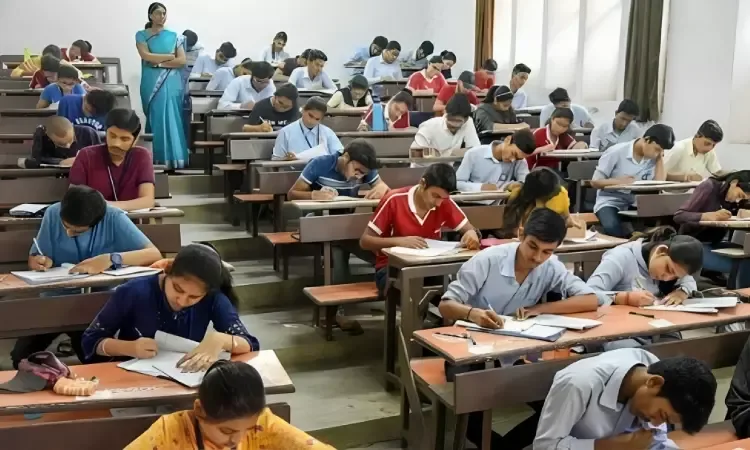
The dispute arose from Rajasthan’s recruitment examination for Class-IV government posts.
According to reports on the court proceedings, candidates belonging to certain horizontal reservation categories were included in the selection lists despite their extremely low scores after normalisation.
The reported scores raised a fundamental question: Can a candidate who has scored virtually zero marks be selected for a government post if the applicable recruitment rules do not prescribe an adequate minimum qualifying standard?
The High Court examined whether the recruitment process had maintained a basic level of merit while implementing reservation provisions.
The High Court’s concern
The Rajasthan High Court questioned whether reservation could operate without any meaningful minimum standard of qualification.
The court’s concern was not simply about reservation itself. Rather, it focused on the manner in which minimum merit and horizontal reservations had been applied in the recruitment process.
The court subsequently quashed selection lists relating to certain specified horizontal/reserved categories and directed the authorities to establish an appropriate minimum qualifying standard.
This distinction is important because the ruling was not a blanket cancellation of all candidates belonging to SC, ST or OBC categories.
Who was actually affected?
The controversy became larger on social media because some reports and posts presented the matter as though the court had cancelled the selection of SC, ST and OBC candidates generally.
That interpretation was misleading.
The order concerned specific selection lists and categories, particularly certain horizontal reservation categories. Reports identified categories including SC-Widow, ST-Widow, OBC-Widow and General Ex-servicemen, among others.
These categories operate differently from ordinary vertical reservations because horizontal reservations cut across broader categories.
Therefore, the judgment should not be read as saying that every SC, ST or OBC candidate selected in the recruitment had scored zero or that their appointments had been cancelled.
The dispute was specifically connected with the selection of candidates in the affected categories and the extremely low marks recorded by some of them.
What does ‘horizontal reservation’ mean?
The distinction is important to understand the case.
Vertical reservation generally refers to reservations for categories such as SC, ST and OBC.
Horizontal reservation, on the other hand, operates across these categories. It can cover groups such as women, persons with disabilities, ex-servicemen or other specified categories, depending on the applicable rules.
For example, a horizontal reservation for women can apply within the SC, ST, OBC and unreserved categories.
That is why describing the case simply as an “SC/ST/OBC recruitment cancellation” does not accurately explain what the court was dealing with.
The reported 0.003-mark score
Perhaps the most eye-catching detail in the controversy was the reported score of 0.003 marks out of 200.
Such a figure naturally raised questions about how a candidate could appear in a government recruitment selection list with practically no marks.
However, the context of the recruitment process matters.
The controversy involved normalised scores and category-wise selection, meaning the final position of a candidate could not necessarily be understood simply by looking at the raw examination score alone.
The central legal issue was therefore not merely whether an individual candidate had obtained an extraordinarily low score. It was whether the recruitment framework provided a lawful and meaningful minimum standard while applying the reservation rules.
The government challenged the decision
The controversy did not end with the High Court's order.
The Rajasthan government challenged the High Court’s decision, taking the matter further in appeal.
According to reports at the time, the operation of the High Court's order was subsequently stayed while the challenge was considered.
That means the legal position cannot be accurately described simply as: “The High Court cancelled 1,200 government jobs.”
The matter became subject to further judicial proceedings, and the eventual outcome of the challenge is crucial to understanding what happens to the affected recruitment lists.
What the case is really about
Behind the dramatic numbers lies a broader question about how government recruitment should balance reservation, merit and minimum qualification standards.
Reservation is a constitutionally recognised mechanism intended to provide representation and opportunities to specified groups. But recruitment authorities must also follow the rules governing eligibility, selection and qualifying standards.
The Rajasthan case therefore raises a difficult question:
How low can a qualifying score go before a selection process ceases to satisfy the basic requirement of merit?
There is another equally important question:
Should every recruitment examination have a clearly defined minimum qualifying standard before selection begins?
If such a standard exists, candidates know the threshold they must cross. If it does not, disputes can arise when candidates with extremely low scores are nevertheless included in final selection lists.
Why the case matters
The Rajasthan Class-IV recruitment controversy is therefore about more than the reported figure of 1,200 candidates or the viral claim of “zero marks and government jobs.”
It highlights three separate issues:
Minimum qualifying marks: Should candidates have to cross a clearly defined minimum threshold?
Reservation rules: How should horizontal reservations be applied alongside vertical reservations?
Recruitment transparency: Should selection rules and qualifying standards be clearly established before an examination is conducted?
The controversy also demonstrates why court orders need to be read carefully before broad conclusions are drawn from them.
The Rajasthan High Court’s intervention concerned specific selection categories and the absence or adequacy of minimum standards, rather than a blanket declaration that SC, ST or OBC candidates had been selected illegally.
For the candidates involved, however, the stakes remain substantial. A court decision affecting a selection list can determine whether a candidate receives a government appointment, while any subsequent stay or appeal can keep that position uncertain.
Ultimately, the case leaves behind a question that extends beyond Rajasthan:
In a government recruitment examination, what should be the minimum level of performance required for a candidate to qualify — and who should set that standard?