
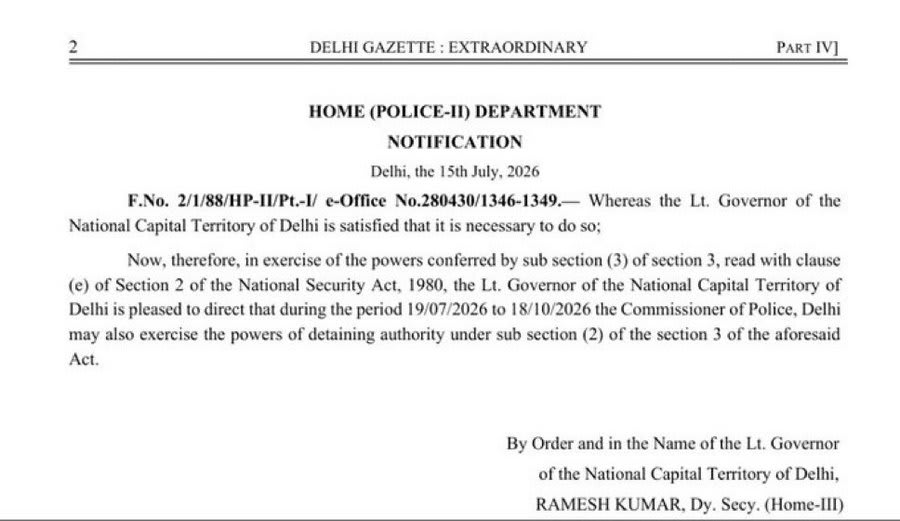
The National Security Act, 1980 is a preventive detention law that allows the government to detain a person without a regular criminal trial for a limited period if it believes the person's actions could threaten:
India's national security,
Defence of the country,
Public order,
Relations with foreign countries, or
The maintenance of essential supplies and services.
Unlike a normal criminal case, preventive detention under the NSA is intended to prevent an anticipated threat rather than punish someone for a past offence.
How Long Can Someone Be Detained?
A person detained under the NSA can be held for up to 12 months, subject to legal procedures, periodic review by an Advisory Board, and the provisions of the Act. The detainee has limited rights to know the grounds of detention immediately if the government considers disclosure against the public interest.
What Does the Latest Order Actually Do?
The latest order does not impose the NSA across Delhi or automatically lead to arrests. Instead, it authorises the Delhi Police Commissioner to exercise preventive detention powers under the Act during the specified period, where the legal requirements of the NSA are considered to be met.
Such authorisations have been issued in previous years as well.
Could This Affect Protesters?
The order has prompted discussion because preventive detention laws can have implications for public demonstrations.
Possible impacts include:
Authorities may invoke the NSA against individuals if they believe their actions go beyond peaceful protest and pose a threat to public order or national security.
People participating in peaceful, lawful protests are not automatically covered by the NSA merely because they are protesting.
However, critics argue that broad preventive detention powers may have a chilling effect, with some people fearing detention even before any offence is proven.
Supporters of the law argue that it is necessary to prevent violence, riots, or activities that could seriously disrupt public order or threaten national security.
Whether the NSA is applied in any specific case depends on the facts, the government's assessment, and remains subject to judicial scrutiny.
Why Is the NSA Controversial?
The Act has long been debated because it permits detention without a conventional criminal trial. Civil rights groups have criticised its potential for misuse, while governments have defended it as an important tool for maintaining national security and public order in exceptional situations.
The practical impact of the latest authorisation will depend on how, and in what circumstances, these powers are exercised during the three-month period ending on October 18.